Chambers Nameplates · buyer guide
Attorney desk inserts versus complete nameplates
For Chambers Nameplates worldwide orders, start by deciding whether the existing desk holder or base will remain in use. If it will, the replacement insert must be specified against that particular holder. If the firm wants a new complete nameplate, compare the whole proposed object, including support, visible face and personal text.
Reviewed 2026-09-05 · AI-assisted editorial review. General buying guidance; illustrative scenarios are not customer case studies. Images are AI-generated concepts.
The two routes can have similar photographs while involving different work.
An insert order is most useful when the holder is sound, the firm likes its appearance and its dimensions can be confirmed. A complete piece is worth considering when there is no holder, the old one is unsuitable or the firm wants a deliberate visual change. Do not choose solely from a lower line-item price before confirming that the missing components are already available and appropriate.
How do you measure the usable opening and the panel separately?
Record the existing panel's width, height and thickness where they can be measured reliably. Also record the holder opening and the path by which an insert enters it. A visible window can be smaller than the panel behind it, and a nominal product name may not describe either measurement accurately.
Provide a photograph that shows the holder from the front and another that explains how the panel is retained.
Ask the maker which dimensions and tolerances they need rather than inventing a fit allowance. Note curved edges, clipped corners, holes or other features that might affect compatibility. If the original insert cannot be removed safely by authorized staff, request an appropriate inspection route. A replacement quote should identify unresolved measurements instead of treating an estimate as a production drawing.
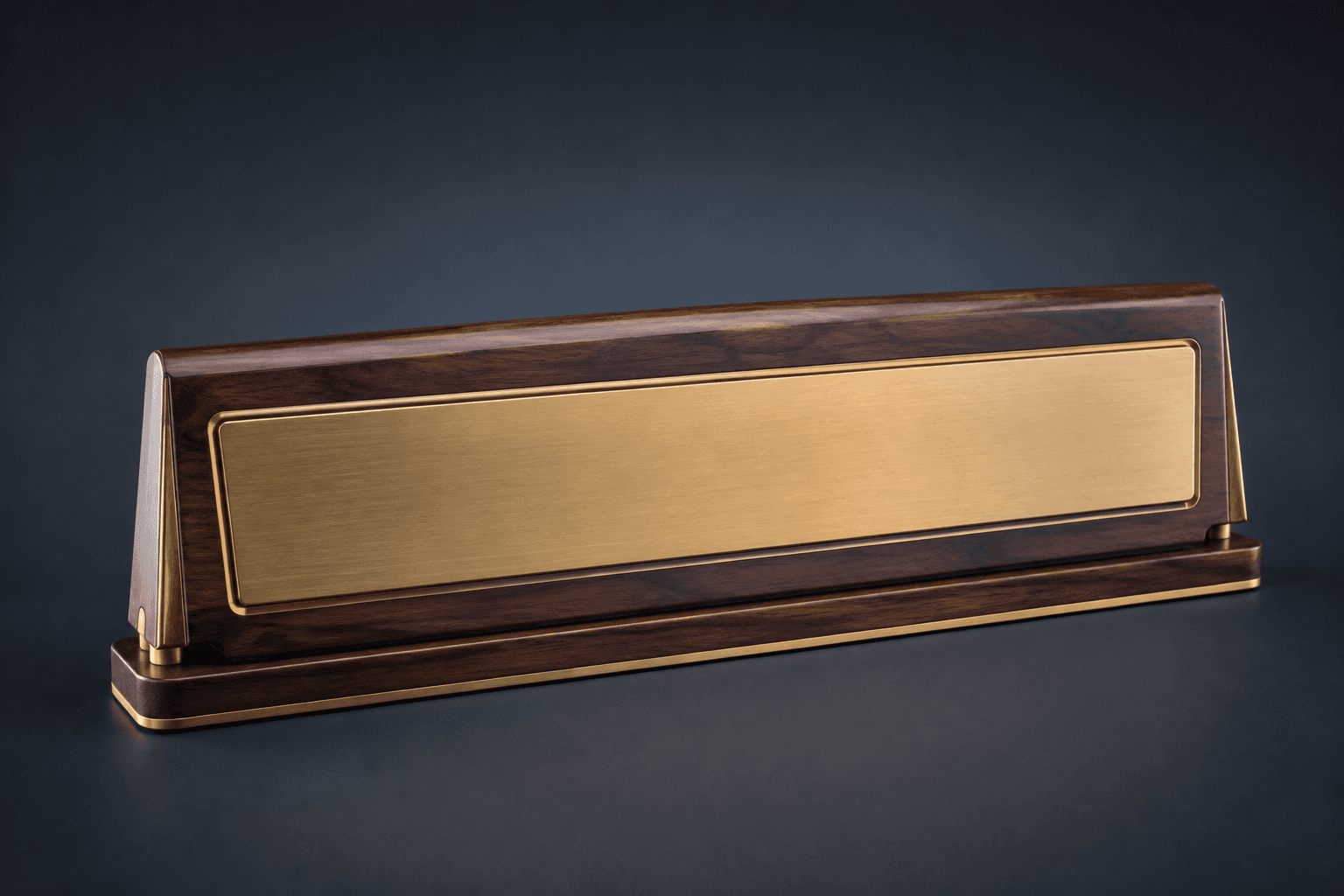

How do you specify what the desk user will see?
The attorney's preferred display name and approved role line should be separate from the physical measurements. Confirm whether the desk piece identifies the individual, a practice group or a shared function. If a role is temporary, discuss whether it belongs on a replaceable element rather than a permanent base.
The office administrator should obtain approved wording instead of asking the engraver to infer professional status.
Review the text in the visible area of the holder, including any part hidden by its lip. A correctly sized panel can still have text covered after insertion. Ask for a proof that shows the visible boundary and any proposed logo. Keep a long title from forcing an unauthorized abbreviation of the person's name; the authorized reviewer should decide what can be shortened.
How do you compare assembly and replacement work explicitly?
For the insert proposal, list the panel material, personalization, quantity and any sample-fit step. For the complete-nameplate proposal, add the holder or base and describe whether assembly is included. Ask what arrives ready for desk placement and what staff must still do. A photograph of an assembled object does not establish that the quote includes every visible component.
Consider how the firm will handle the next occupant. A replaceable insert may preserve the holder, but only if the replacement specification is retained and the proposed system remains appropriate. A complete personal piece may instead belong to the attorney. Decide ownership before treating a desk object as office inventory, especially if the nameplate is being given as a joining gift.

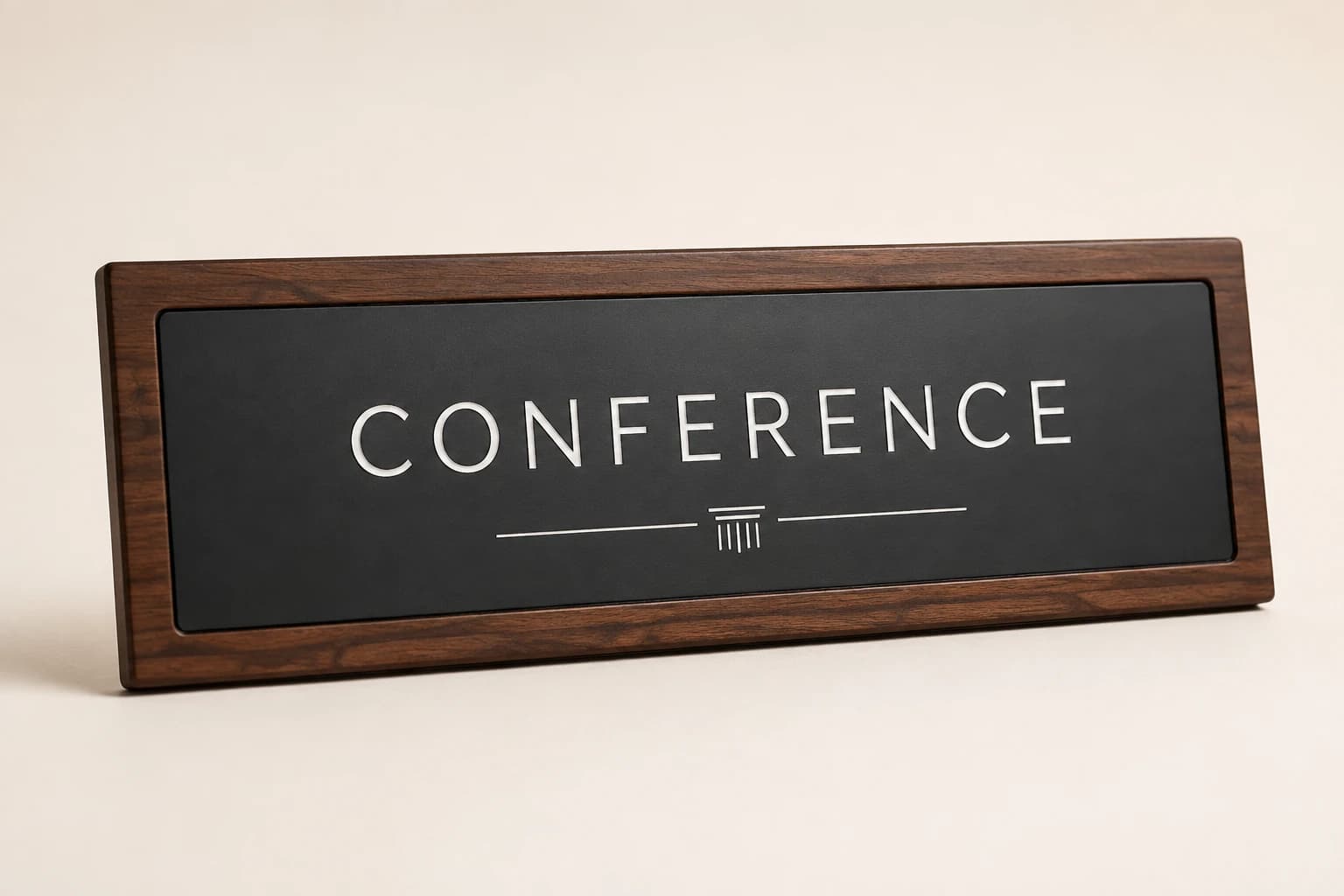
Illustrative example: How do nine inserts and three complete nameplates total twelve?
Imagine a fictional firm with nine reusable desk holders and three new desks without holders. It approves one replacement insert for each existing holder and one complete nameplate for each new desk. The personalization count is twelve faces, but the physical supply scope contains nine inserts plus three complete assemblies. It does not contain twelve new holders.
For a simple piece reconciliation, enter nine main units, one each, three additional category pieces and no spares. The calculator displays twelve total pieces. The worksheet labels the two categories so the total does not erase their different component scope. The three complete assemblies each count as one ordered deliverable in this illustration, with their included components described separately.
If one of the nine existing holders proves incompatible, revise that row to a complete assembly only after the firm approves the change. The ordered-deliverable count can remain twelve while the supplied-holder count increases from three to four. That is why the quote needs component detail as well as a grand total.
Reconcile insert and complete-piece quantities
Load the fictional worked example, then replace every assumption with your approved project inputs.
Method: Calculate only the entered physical counts. The result does not choose specifications, authorize wording or reserve production.
Build your plan
Set spares yourself. This calculates the quantities you enter; it does not assume a recommended buffer.
Use the article’s example files
Fictional example rows show how to separate physical quantities, wording and approval references. Replace them with your project schedule. HOLD and SAMPLE entries are not production instructions.
How do you test fit before broad release when compatibility is uncertain?
For an uncertain holder, ask whether a sample insert or other agreed fit check is appropriate. Define the check: insertion without the proposed panel being forced, visible text area and stable retention in the intended desk use. The maker should establish the technical acceptance method for the actual system.
Do not turn an informal trial into a claim of universal compatibility.
Keep the sample separate from the released personalized batch unless its use in that batch is explicitly agreed. A sample with placeholder text is not an attorney's approved nameplate. If the test changes panel dimensions, update the drawing and proof together. An approved layout based on the old visible area may need revision even when the name and role strings remain unchanged.

How do you receive against holder groups, not only names?
Sort the received inserts by the holder reference before staff begin replacing panels. Match each attorney's approved text to the intended desk and check the completed appearance after insertion. Two same-sized-looking panels can belong to different holders, so a quick name-only check is insufficient when the firm has mixed hardware.
For the complete pieces, verify the included base or holder and agreed assembly state. Record a discrepancy with the object reference and the relevant proof or specification rather than describing every issue as the nameplate being wrong. Keep removed inserts and packaging under the firm's own disposal or retention process. The completed order should leave an accurate replacement specification and a clear account of which desks use which system.
How do you resolve mixed hardware before comparing unit prices?
A firm may have acquired its desk holders through several purchases, including a merger or a move. Survey a representative item from each visibly different group and ask the facilities coordinator whether hidden differences are known. Do not average their dimensions into one nominal size. The replacement panel must fit the actual holder at its destination.
When comparing proposals, ask how each maker has interpreted the measurements. One may be quoting panels only, another complete assemblies and another a preliminary sample followed by production. List those differences before deciding which total is lower. A low panel price does not help if the firm still needs to purchase bases or pay for a second fit revision.
Include a written decision for damaged or missing holders. The coordinator may choose to replace those complete pieces while retaining compatible holders elsewhere. Keep the exception group visible so the purchase does not silently expand into a full hardware replacement. After the order, update the inventory with the new holder references; otherwise the next administrator will face the same uncertainty. This makes the first survey useful beyond a single attorney’s name change.
How do you preserve the fit record for future personnel changes?
Keep the approved insert drawing attached to the holder reference. A future coordinator should be able to find the panel dimensions, thickness, corner treatment and insertion direction without measuring a finished nameplate from a photograph. Retain the firm-approved layout independently from the individual attorney's text so one person can change without redesigning the entire office.
When holders of different generations are present, give each generation a separate reference. Visual similarity is not enough to merge them into one replacement size. Ask the maker whether a sample or measured drawing is needed for an uncertain holder. If a test piece is agreed, record what fit question it answers and do not assume that one successful sample validates every different holder in the firm.
Which option fits this order?
Choose an insert when compatible retained hardware is confirmed, a complete piece when a new support is needed, or a defined sample step when fit remains unresolved. Compare the actual supplied components and next replacement task. A shared nameplate label does not make panels, holders and assembled desk objects equivalent purchasing units.
| Option | Useful when | Scope to resolve |
|---|---|---|
| Insert only | The existing holder is retained and its compatibility can be confirmed. | Panel dimensions, visible opening, thickness, retention and the exact approved text. NameBadge.com lists desk and wall nameplates. |
| Complete desk piece | A new base or holder is needed, or the firm wants a different complete object. | Included support, assembly, desk footprint, ownership and future personalization method. |
| Sample fit followed by batch | Existing hardware cannot yet be specified with confidence. | What the sample proves, its separate quantity and which drawing revision governs the final inserts. |
Sources: NameBadge.com: Custom Desk Name Plates & Office Name Plates
What should buyers confirm before ordering?
Desk-nameplate questions should begin with the retained holder and the complete quoted scope. Cost, fit and future updates depend on those physical facts as well as approved attorney wording. These answers separate panel dimensions, visible windows, mixed hardware and complete assemblies so a lower insert price does not conceal missing components.
What changes the cost of an insert versus a complete nameplate?
Chambers Nameplates quote requests should distinguish replacement panels from complete desk assemblies with new holders or bases. Measurements, personalization, sample-fit work and included components affect the comparison. A lower insert price is useful only when the retained hardware is compatible and the firm has not omitted another component it still needs to purchase.
Is the visible window the insert size?
Not necessarily. Measure and identify the panel and opening separately, then have the maker confirm the required production dimensions. The holder may cover part of the panel. Include the insertion path and any covered edge in the brief. A panel can be larger than its visible window, so a drawing should show the area available for the actual name and role text.
Can one attorney change without replacing all holders?
That depends on the chosen system and retained specification. Ask for a scoped replacement insert proposal against the actual holder rather than assuming another catalog panel will fit. Retain the accepted panel dimensions and holder reference with the current approved wording. A future administrator should not have to reconstruct compatibility from a photograph or assume another same-sized catalog item is equivalent.
Should a complete assembly count as several calculator pieces?
Choose the counting unit explicitly. This example counts ordered deliverables and records included components separately. If you need a component inventory, calculate it as a separate schedule. Keep the component scope beside the deliverable total so the receiving team knows what is included. Nine inserts and three complete pieces can total twelve deliverables while requiring only three new holders.
What if the office has several holder styles?
Give each holder group its own measured reference and connect the approved inserts to their destinations. Visually similar hardware may need different panel specifications. Ask the maker what information or sample review is required, then keep the accepted drawing with that holder group for later personnel changes and replacement orders.
Sources and scope
The sources below support the cited technical details. The ordering workflows are editorial recommendations. Your project specification, price and schedule are established in the written quote and approved proof.
- NameBadge.com: Custom Desk Name Plates & Office Name Plates · checked 2026-09-05
Which buying guide should you read next?
All buying guidesUse one firm order with separate desk, door and shared-room schedules so repeated attorney names do not conceal missing signs or mismatched mounting.
Prioritize the approved professional identity, then use actual-size layouts to handle long names and credentials without inventing abbreviations.