Chambers Nameplates · buyer guide
Desk and door identification in one firm order
For Chambers Nameplates worldwide orders, a firm order can contain two pieces with the same attorney name because one belongs on a desk and one belongs at a door. It can also contain shared-room signs with no person's name at all.
Reviewed 2026-09-05 · AI-assisted editorial review. General buying guidance; illustrative scenarios are not customer case studies. Images are AI-generated concepts.
Start with a location survey and a personal-piece list, then connect them through stable references. Do not simply multiply the attorney roster by two unless every attorney actually needs both pieces.
For each proposed item, identify its use, destination and whether it is a replacement panel or a complete assembly. Record existing holders separately from new components. A door sign and desk plate may share colors and typography while requiring different dimensions or supports. The common brand treatment should not conceal these physical differences in the quote.
How do you build an order matrix that survives sorting?
Use one row per physical placement or personal deliverable. Include a person reference when applicable, location reference, sign type, quantity, wording revision and component specification. Keep these fields together when filtering by office, floor or product type. Sorting only the names column can put correct names beside the wrong rooms without changing the grand total.
A separate summary can show how many desk pieces, door pieces and shared signs are needed. That summary is useful for comparing proposals, but it should not replace the detailed placement schedule. Ask reviewers to reconcile the summary with its underlying rows. If the firm adds a conference room or removes a vacant office from the order, the change should be visible at both levels.
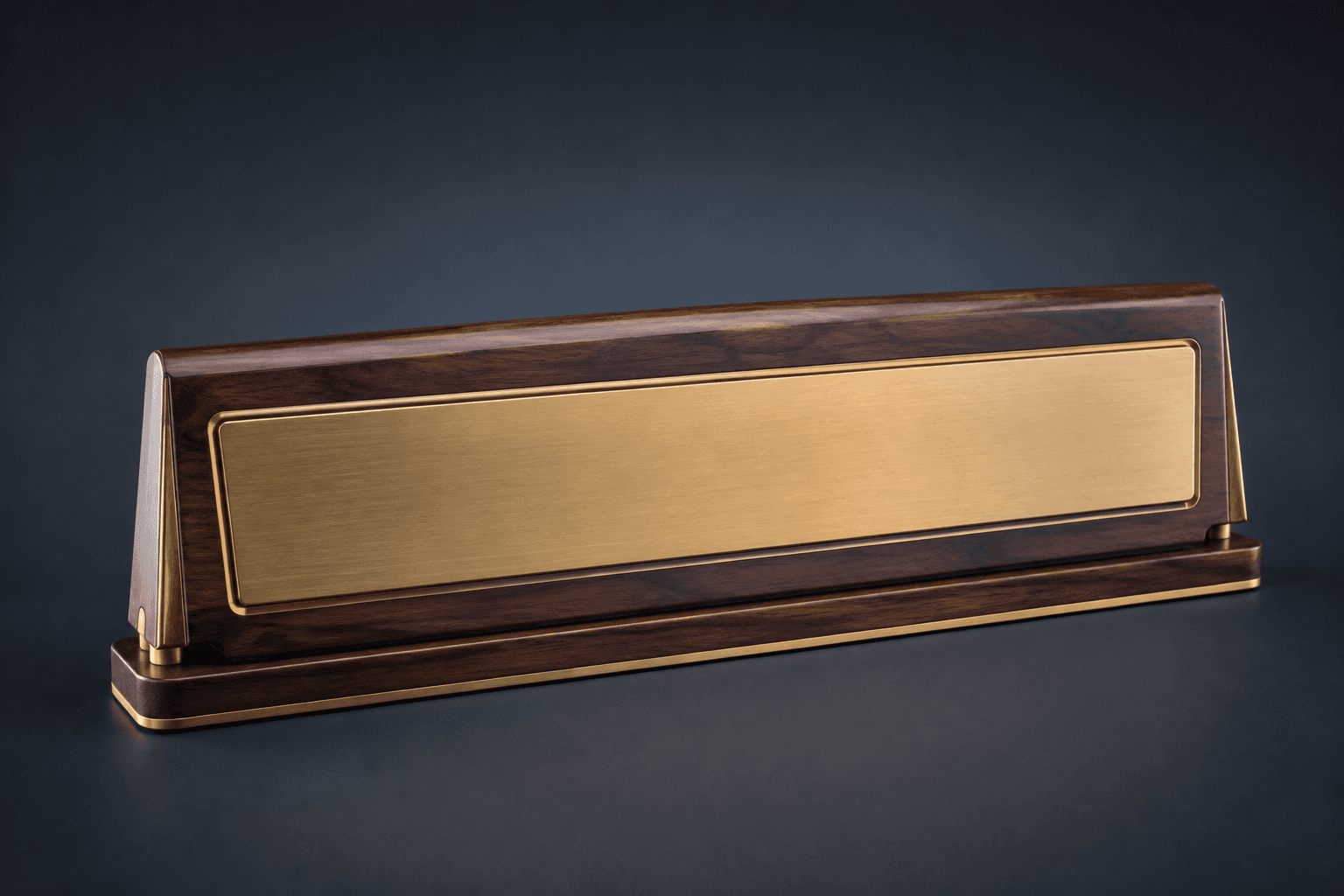
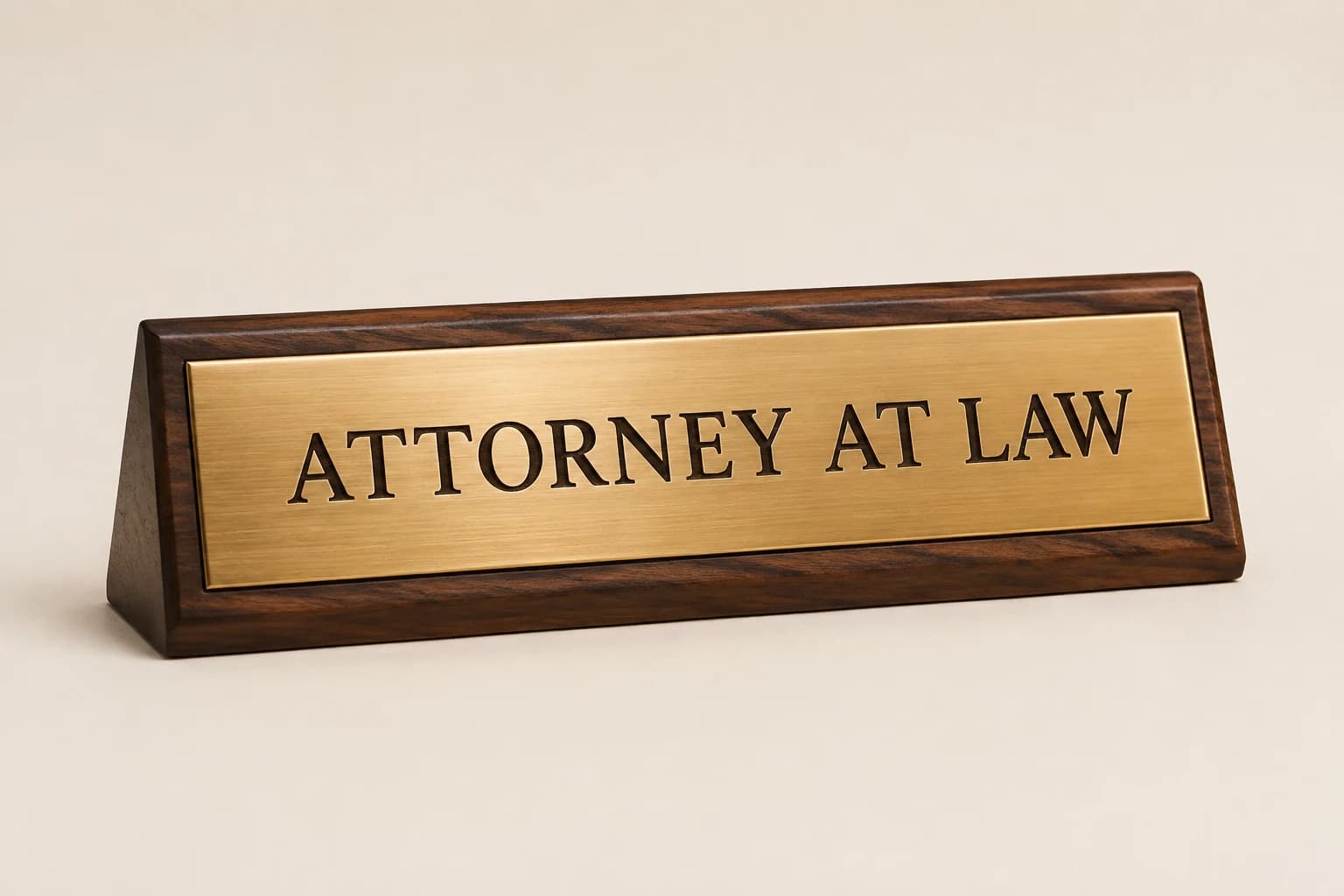
How do you coordinate appearance without assuming identical dimensions?
Choose a common visual vocabulary such as logo treatment, name hierarchy and approved color references. Then review the desk and door applications in their actual proposed formats. A layout that works at arm's length may not suit a corridor view, and a door holder may hide an edge that is visible on a freestanding desk piece.
Ask the responsible facilities contact to review door placement and any applicable building requirements for the specific project. This guide supplies an ordering method, not an accessibility or installation specification. Keep any specialist requirements in the sign schedule so they reach the maker before artwork is finalized. The firm should not discover after receipt that a decorative concept was being treated as a functional room identifier.
How do you assign wording owners by field?
The attorney or authorized firm contact should approve the preferred display name and role. The office manager should approve the location assignment and shared-room label. A brand reviewer can approve logo use and visual consistency. These approvals can be coordinated in one record while remaining distinguishable; a logo approval does not verify which person occupies office B14.
Review long names, repeated surnames and titles with similar abbreviations. When the same personal string appears on desk and door pieces, link both proofs to one approved wording source. If the door needs shorter content because of its actual layout, obtain a specific approved variant. Do not let the maker remove credentials on one version merely to make it resemble the other.

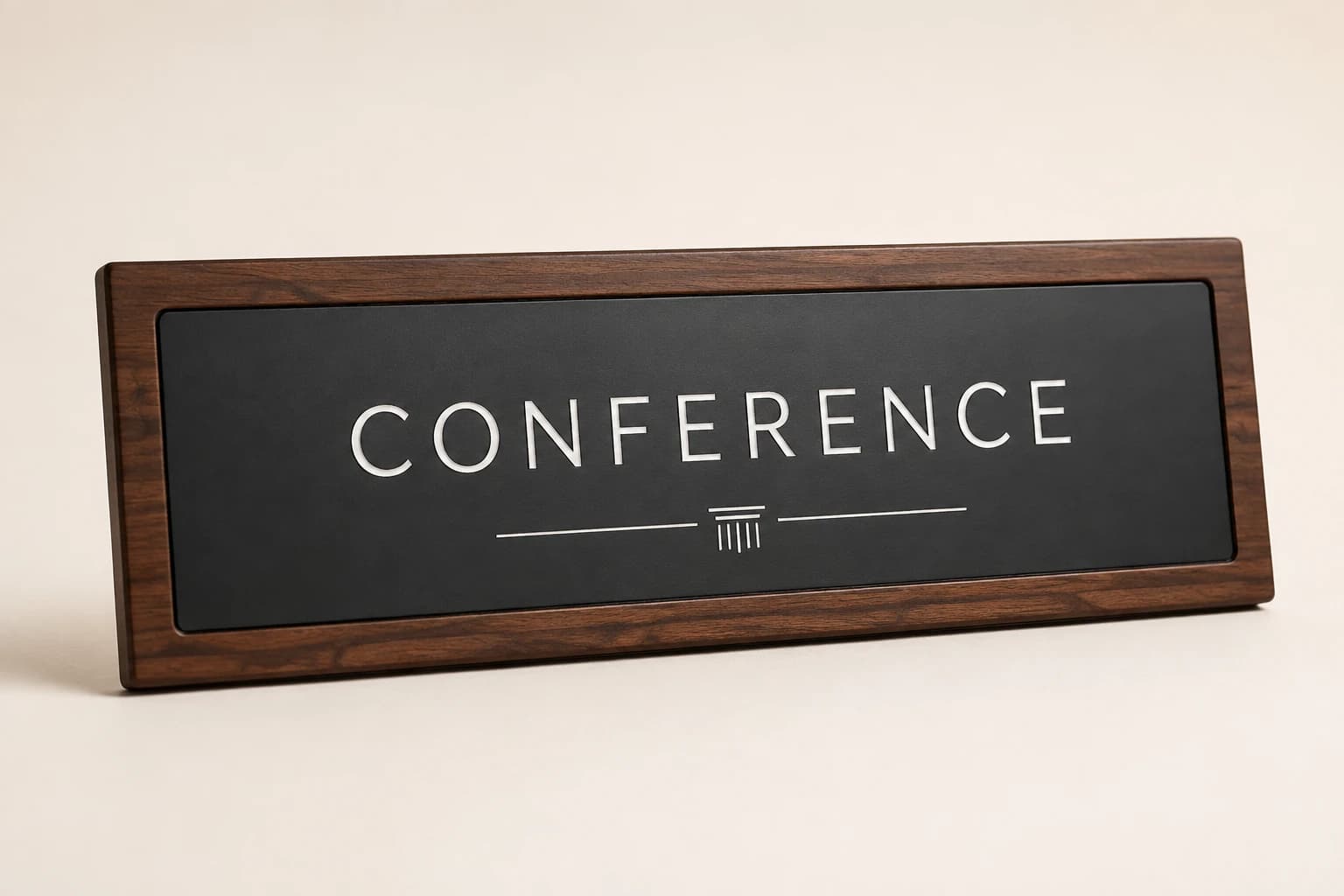
Illustrative example: How do six desk-and-door pairs and three shared signs total fifteen?
Imagine a fictional office with six attorneys, each needing one desk piece and one door piece. It also needs three shared-room signs. Six times two gives twelve personal identification pieces, and adding three shared signs gives fifteen ordered pieces. The room-sign calculator example uses six units, two each, three extras and zero spares.
The worksheet separates six desk pieces, six door pieces and three shared signs. All counts are illustrative. The detailed real schedule would identify each room, approved wording and holder specification. Fifteen is the object count, not the number of unique names or the number of new holders.
Suppose one attorney works from a shared office and needs only a desk piece. Remove that attorney's individual door piece, then decide whether the shared-office sign is already among the three shared signs. The revised total is fourteen if no new shared sign is needed. Avoid both keeping the unnecessary door plate and adding another shared sign simply because the roster structure changed.
Count personal and shared-office signs
Load the fictional worked example, then replace every assumption with your approved project inputs.
Method: Calculate only the entered physical counts. The result does not choose specifications, authorize wording or reserve production.
Build your plan
Inventory is separate from design compliance. Supply the sign schedule, mounting locations and applicable requirements for review.
Use the article’s example files
Fictional example rows show how to separate physical quantities, wording and approval references. Replace them with your project schedule. HOLD and SAMPLE entries are not production instructions.
How do you pack by installation destination while preserving type?
Ask for packages or internal labels that distinguish desk pieces from door pieces, even where names repeat. Organize the door group by the approved location sequence so authorized staff can match each piece to its holder. Keep shared-room signs clearly identified; a conference room should not inherit the name of the last attorney listed beside it in a spreadsheet.
If several offices receive separate cartons, reconcile the per-office counts with the total order. State who receives each carton and who performs the placement review. A correct shipment to headquarters does not complete the internal distribution task. Retain the packing list with the sign schedule so a missing piece can be investigated by reference rather than by an approximate description.
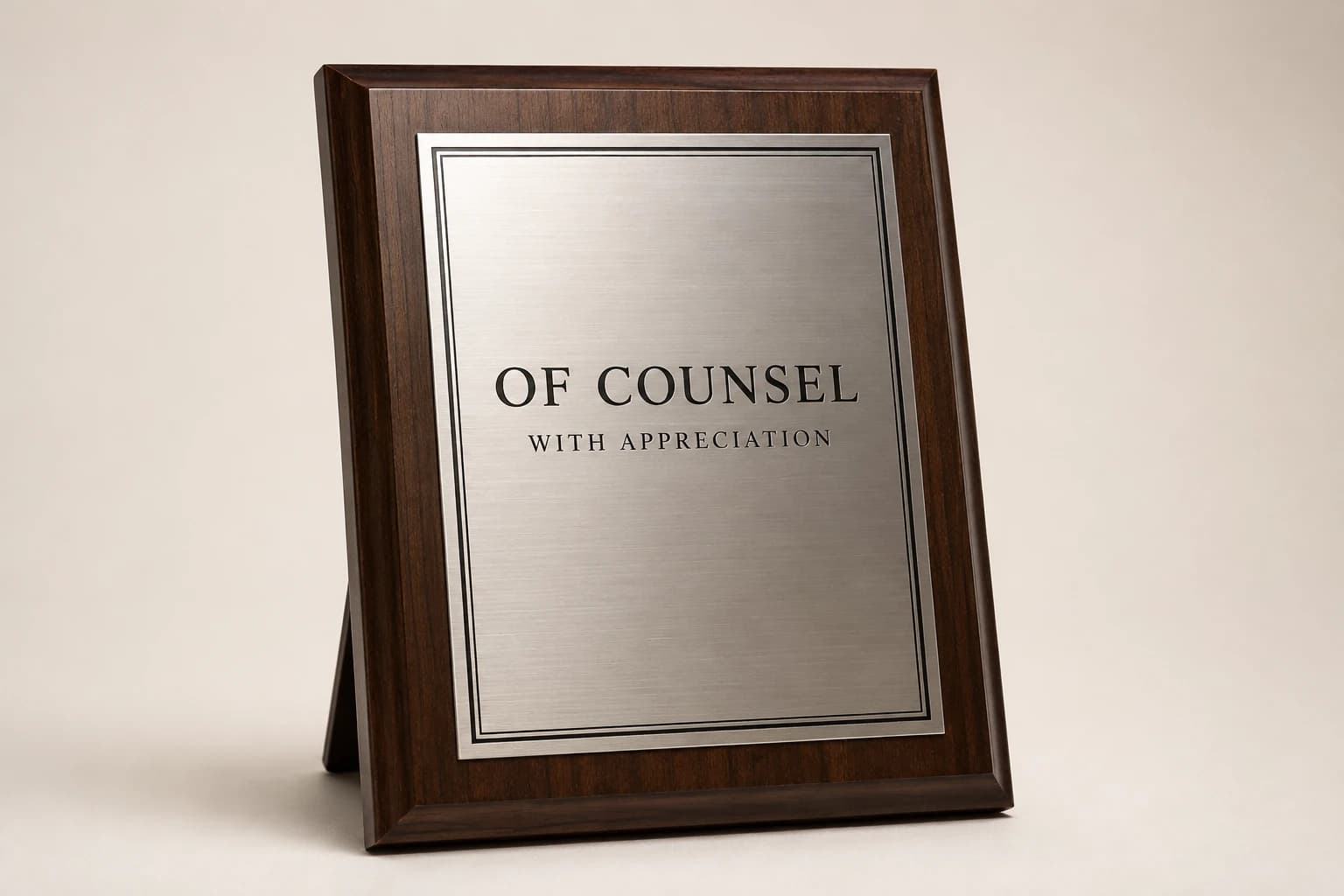
How do you check the installed relationship, not just the engraving?
At receipt, first compare the text with the approved proof. After authorized placement, check the relationship between the sign and its actual room or desk. A perfectly engraved attorney name on the wrong office door is still an incorrect outcome. Record any location change in the schedule so the final inventory reflects the physical arrangement.
For reorders, identify whether the request changes a person's name, their role, their room or the underlying hardware. Each change affects a different part of the record. Keeping those distinctions allows the firm to replace only the necessary objects and helps prevent a routine office move from becoming an unexplained full set of new nameplates.
How do you reconcile a partial office rollout?
A firm may need one floor completed before another because rooms are being refurbished or staff are moving in stages. Divide the schedule by actual release readiness, with each row retaining its desk or door purpose. A finished first-floor proof should not authorize second-floor signs whose occupants are still provisional.
Ask the office coordinator to identify the minimum coherent group needed for each handoff. That might include a reception identifier, the occupied office doors and the matching desk pieces for those people. Avoid sending only the easiest short names while the remainder of a usable office set stays unresolved. A partial delivery should have an explicit operational purpose.
For the remaining group, record why each item is held: wording, room assignment, holder measurement or another specific decision. The reason determines who can clear it. A designer cannot resolve an unsettled seating plan, and an attorney cannot confirm an unmeasured door holder merely by approving their name.
When the second group is released, compare its visual specification with the first approved group and identify any intentional differences. The firm may accept a later hardware change, but that should be a deliberate decision. Keep the two delivery totals connected to the full schedule so a completed first phase is not mistaken for completion of the entire firm order.
How do you give office moves a location history?
A firm can retain the same attorney name while changing the room where that person works. Keep the person reference separate from the room reference so a move does not look like a name correction. The desk piece may move with the attorney while a door holder remains at the old office. Review those two actions separately.
If the firm has shared offices, record whether the door identifies current occupants, the room itself or a function. A list of all attorneys who sometimes use the space can become crowded and quickly outdated. Have the office manager approve the intended identification model. The order should reproduce that decision rather than infer it from a seating spreadsheet that was created for another purpose.
Which option fits this order?
Choose desk, door and shared-room pieces according to their actual locations and information owners. The fictional six-attorney plan contains twelve personal pieces and three shared signs, but real shared offices or retained hardware can change that mixture. Compare physical specifications and placement records while preserving one approved source for repeated personal wording.
| Option | Useful when | Scope to resolve |
|---|---|---|
| Desk identification | A personal object belongs at an attorney’s working position. | Preferred text, desk footprint, complete piece or insert, and whether it moves with the person. NameBadge.com lists desk and wall nameplates. |
| Door identification | The approved location needs an occupant or room identifier. | Room reference, mounting or holder specification and project-specific facilities review. |
| Shared-space sign | A conference room or common function needs its own label. | Location-owned wording, quantity and separation from the individual attorney roster. |
Sources: NameBadge.com: Custom Desk Name Plates & Office Name Plates
What should buyers confirm before ordering?
A combined firm order needs separate desk and location records even when the same names repeat. Price comparisons should follow the complete physical schedule, and office moves should identify the pieces that actually change. These answers distinguish wording, quantity and placement so an approved engraving is not mistaken for a correct installed location.
How should a combined desk-and-door order be priced?
Chambers Nameplates quotes should separate desk pieces, door identifiers and shared-room signs by physical construction and quantity. Existing holders, new supports, personalization and per-office packing can change the total. Compare the complete location schedule with the written proposal rather than assuming every attorney needs two identical products at one uniform unit price.
Can we just order two pieces per attorney?
Only when the actual schedule confirms that each person needs both. Shared offices, existing usable pieces and vacant rooms can change the count. Reconcile the roster with actual placements and retained components. A shared room may use one location-owned sign, while some attorneys need only a desk piece or already have an accepted identifier.
Should desk and door signs use the same wording?
Use one approved source where the wording is shared, but allow explicitly approved variants when the purposes differ. Physical layout should not trigger an unauthorized change in professional title. Store any shorter door version as an explicit approved variant connected to the same person. The designer should not remove a role or credential simply to make a smaller holder resemble the desk layout.
Who checks that the right name reaches the right door?
Assign that to the office or facilities coordinator using the final location schedule. Text approval alone does not verify placement. After authorized placement, compare the physical door with the final room schedule. A correct engraving on the wrong office is still an incorrect outcome even when every piece in the shipment is accounted for.
Does an office move require a new desk nameplate?
Not automatically. A personal desk piece may move with the attorney while a door identifier or occupant insert changes at the location. Keep person and room references separate, then identify the actual physical work needed. The office manager should approve the new placement instead of treating a seating-plan change as a name correction.
Sources and scope
The sources below support the cited technical details. The ordering workflows are editorial recommendations. Your project specification, price and schedule are established in the written quote and approved proof.
- NameBadge.com: Custom Desk Name Plates & Office Name Plates · checked 2026-09-05
Which buying guide should you read next?
All buying guidesMeasure the existing holder before ordering an attorney insert, and compare replacement panels with complete desk pieces by the components actually supplied.
Approve each language version for meaning and placement, then review the complete law office sign at actual size without treating translation as a title authorization.