Chambers Nameplates · buyer guide
Long credentials on professional nameplates
For Chambers Nameplates worldwide orders, a professional nameplate should make its intended identity clear before it attempts to include every biographical detail. Start with the approved display name, then decide which role or credential line helps the reader in that setting.
Reviewed 2026-09-05 · AI-assisted editorial review. General buying guidance; illustrative scenarios are not customer case studies. Images are AI-generated concepts.
A desk visitor and a corridor visitor may need different levels of detail. Have the firm choose the hierarchy before asking a designer to reduce text to fit.
Separate the name, role, credentials, firm identity and optional message into fields. This makes it easier to decide what is essential and what belongs elsewhere. Do not shorten a person's name because a long credential list was copied into the design without review. The authorized reviewer should decide which information belongs on the physical object and which can remain in other professional materials.
How do you collect exact strings without editorial improvisation?
Ask the attorney or designated firm contact for the preferred visible name and approved professional wording. Preserve accents, initials, punctuation and capitalization intentionally. A staff directory can be a useful starting reference, but it may have been written for search, payroll or internal administration rather than public display. Obtain a specific approval for the nameplate text.
When a credential is unfamiliar, ask for confirmation instead of expanding or rearranging it from memory. The firm should resolve professional-title and jurisdiction-specific questions through its responsible reviewer. This article does not authorize any designation. Keep the supplier's role limited to reproducing the approved statement and identifying layout issues that need a decision.

How do you use a text count as a flag, not a fit certificate?
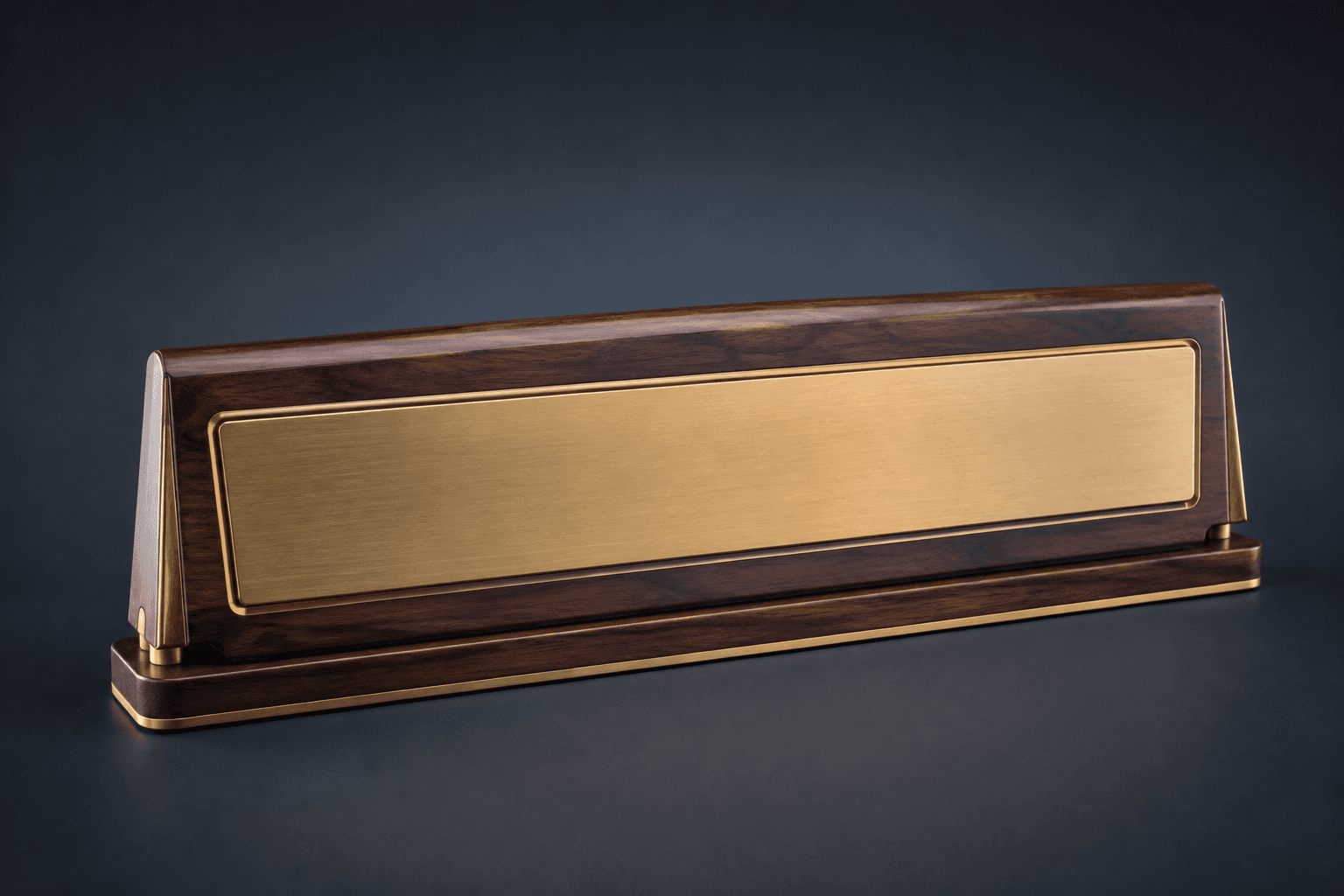
A character count can identify the longest line and show how proposed variants differ. It cannot establish the physical width of a name in the chosen font. Wide letters, punctuation, spacing and script all affect the visible result. Use the checker to organize the review, then assess the actual-size proof against the proposed engraving area.
Compare the longest realistic name and role combination early. If the selected layout fails that case, revise the design before producing a large set of proofs. Ask whether the usable area can change, whether a second line helps or whether optional content can move elsewhere. Each option should preserve the approved meaning and remain within the quoted physical scope.
Illustrative example: How do Morgan Lee and Senior Counsel compare in length?
For a fictional attorney, consider the two lines Morgan Lee and Senior Counsel. Morgan has six letters, Lee has three and the separating space adds one, so the first line has ten characters. Senior has six, Counsel has seven and the space adds one, so the second line has fourteen. The two lines total twenty-four characters.
With a chosen twelve-character line budget, the name is within budget and the role is two characters over. The checker should flag that second line. The example does not imply that Senior Counsel is an appropriate title for any actual person, or that fourteen characters cannot fit a particular product.
The worksheet records the full approved example, its character count and the decision still needed. One option is to review a wider usable area. Another is an authorized short form, if the firm chooses one. A third is a different hierarchy or separate role line. Do not automatically delete Counsel or replace the role with an abbreviation merely to make a numerical warning disappear.
How do you compare layout options at the intended scale?
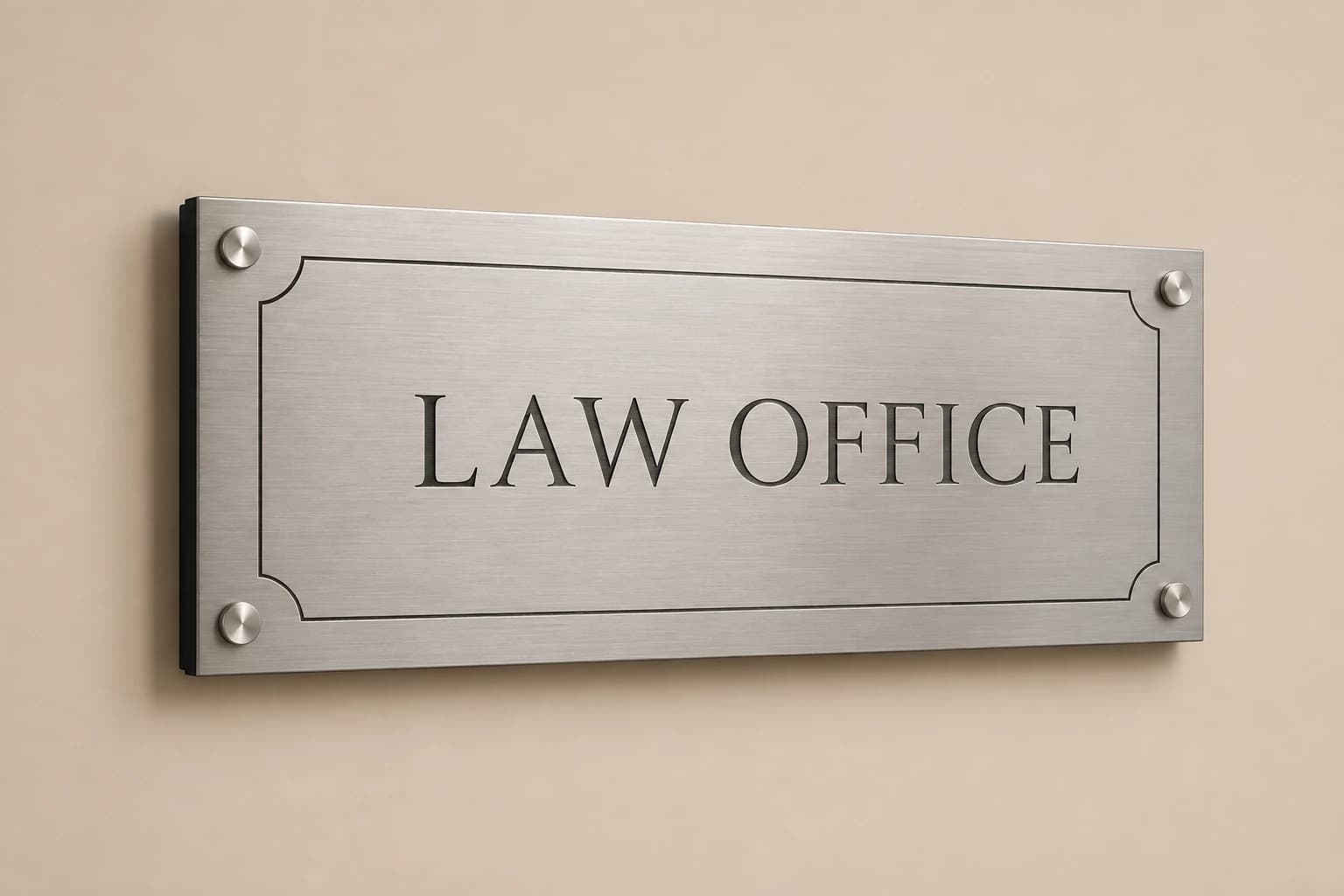
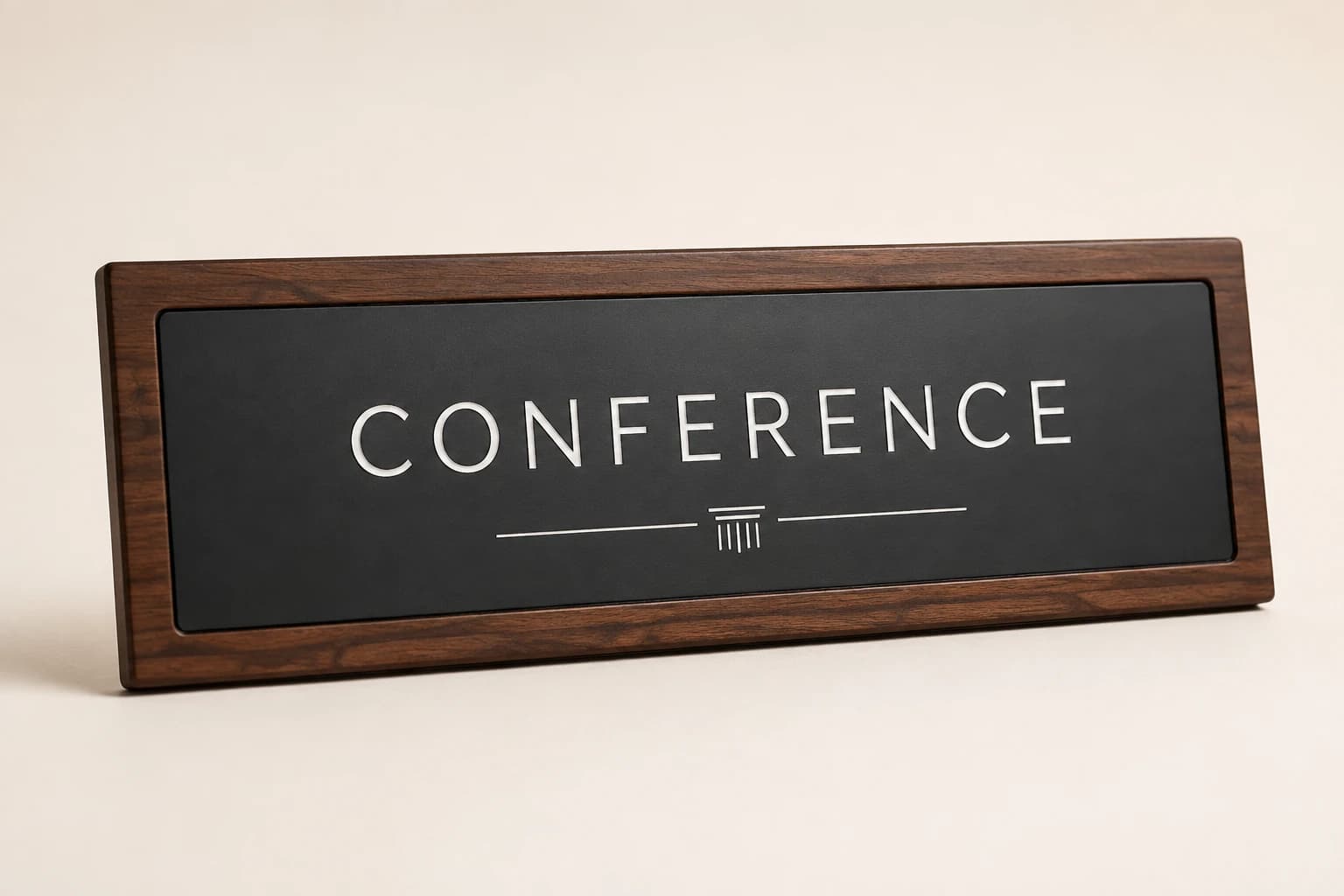
Ask for a proof showing the actual visible boundaries, including any holder lip or decorative element. Review line breaks, alignment and relative size together. Two centered lines can look balanced while the name becomes too small, and a larger logo can consume the area needed for a long surname. The complete object matters more than an isolated text sample.
If the firm uses several nameplate sizes, review the same approved string on each required format. Do not assume that a desk layout can be reduced proportionally for a smaller insert. A deliberate variant may use fewer optional fields or a different line arrangement. Record that variant as a design decision so future replacements remain consistent.
Flag the longest professional text line
Load the fictional worked example, then replace every assumption with your approved project inputs.
Method: Count text characters including spaces by line and compare with the entered budget. No credential validation or physical-fit approval is performed.
Build your plan
Counts include spaces and punctuation. Character count cannot establish physical fit: font, script, layout, material and engraving area require a proof at actual size.
Use the article’s example files
Fictional example rows show how to separate physical quantities, wording and approval references. Replace them with your project schedule. HOLD and SAMPLE entries are not production instructions.
How do you make abbreviations an approval decision?
List every proposed abbreviation with its original full wording and intended use. Ask the authorized firm reviewer to approve the exact shortened string. This is particularly important for credentials and titles, where a small typographic change can alter the apparent meaning. Production should not create a new professional designation as a spacing solution.
If no acceptable short form exists, change the physical or visual proposal. The piece may need a larger usable area, a different orientation or less optional content. Compare the resulting cost and desk footprint before approving the change. A layout constraint should lead to an explicit purchasing decision, not a silent editorial compromise that the attorney discovers after engraving.

How do you review corrections as complete lines?
When a correction changes one initial or punctuation mark, issue the complete revised line with a new proof reference. Avoid fragmented instructions such as remove the second letter after the comma, which require someone to reconstruct the intended text. The reviewer should see the exact final string in context with the other lines.
For a batch, check the longest and most complex entries individually rather than assuming approval of a short sample covers them. At receiving, compare the finished name and credentials with the released proof. Retain the accepted wording for support while keeping the distinction between a historical inscription and the firm's current professional records. A replacement request should identify whether it reproduces the original or updates the person’s current role.
How do you build a review set from difficult real strings?
Before the full batch is laid out, select a few approved strings that test different constraints: the longest surname, a name with punctuation, a multi-part role and an entry with a required accent. Use only the information authorized for production. The goal is to expose layout decisions early, not to circulate a broad personnel directory.
Ask the designer to show those examples using the proposed font and actual usable area. A layout validated only with a short placeholder such as Alex Lee may reveal little about the final order. If the difficult examples need different arrangements, decide whether the family should support a small number of approved variants.
Write a clear rule for choosing each variant, such as the presence of an approved second role line, rather than a vague instruction to make long names smaller. The authorized reviewer should see the effect on the person’s name and credentials. A consistent minimum visual hierarchy can be more useful than identical line counts.
After those examples are accepted, still review every personalized proof. A sample set helps establish a design approach, but it does not verify all names or professional statements. At release, record both the approved text source and the selected layout variant for each piece. That keeps a later correction from being inserted into the wrong format simply because the filename looks similar.
How do you retain approved short forms as explicit variants?
If the firm approves a shortened role line, store it beside the full authorized form and identify where each may be used. Do not allow a short version made for one small desk insert to become the default on every office sign, retirement gift and website record.
A future nameplate order should start from the current approved wording, not an old proof selected because its line length was convenient. When a professional role changes, ask the responsible firm contact which existing pieces need updating. The designer can show how a new string fits the proposed area, but cannot decide whether a credential remains current or whether an honorific should be added.
Which option fits this order?
Choose a larger usable area, an authorized short form or removal of optional content according to the firm’s approved information priorities. A text-count warning identifies a review question, not an impossible engraving. Compare the actual-size layouts and complete physical scope without inventing abbreviations or reducing the attorney’s name to preserve decorative space.
| Option | Useful when | Scope to resolve |
|---|---|---|
| Keep full text and enlarge usable area | The complete credential line is required and the new footprint suits the intended desk or holder. | Actual dimensions, additional cost, line hierarchy and compatibility with existing hardware. NameBadge.com lists desk and wall nameplates. |
| Approve a shorter display variant | The firm has a meaningful short form suitable for this particular use. | Exact approved spelling, where the variant is allowed and preservation of the full source wording. |
| Remove optional content | A logo, message or secondary detail is less useful than a clear professional name. | The reviewer’s priority decision and a revised complete proof showing the resulting balance. |
Sources: NameBadge.com: Custom Desk Name Plates & Office Name Plates
What should buyers confirm before ordering?
Long professional text needs an approved identity source and a deliberate layout decision. Cost can change when the physical format or artwork scope changes, but the character budget does not decide that alone. These answers explain how to test difficult strings, handle credentials and retain authorized variants for accurate future replacements.
Can long credentials change the nameplate quote?
Chambers Nameplates quotes may change when the approved text requires a different usable area, physical format or additional layout work. Ask for the complete proposed object and included components in writing. A character-budget warning does not establish a price increase by itself, and no credential should be shortened merely to preserve an earlier product assumption.
Is an over-budget line impossible to engrave?
No. The budget is a chosen text-review threshold. Physical fit depends on the actual product, font, size and layout and needs its own proof review. Ask the designer to show the exact approved line in the actual visible area. The count is a flag for review; it should not override the firm’s decision about which professional information belongs on the piece.
Can the designer expand unfamiliar initials?
Provide the exact authorized wording. The designer should ask for clarification rather than infer a professional credential or its meaning. Keep unfamiliar initials on HOLD until the authorized firm contact supplies the exact visible form. Expanding them from memory can create a different professional statement even if the resulting phrase sounds plausible.
Should every person use the same number of lines?
Consistency is useful, but an approved exception may preserve clarity better than forcing all names into one arrangement. Review the family of layouts and retain each authorized variant. Retain each selected variant with its wording reference. A future replacement should reproduce the approved hierarchy rather than silently shrink the name to force it into whichever template is easiest to locate.
Which names should be used to test the layout first?
Use approved examples that reveal the actual constraints: a long surname, required punctuation, a complex role line or an accent. Review those strings in each proposed physical format. A short placeholder can establish a visual idea but cannot verify the whole personalized batch or authorize any professional designation.
Sources and scope
The sources below support the cited technical details. The ordering workflows are editorial recommendations. Your project specification, price and schedule are established in the written quote and approved proof.
- NameBadge.com: Custom Desk Name Plates & Office Name Plates · checked 2026-09-05
Which buying guide should you read next?
All buying guidesMeasure the existing holder before ordering an attorney insert, and compare replacement panels with complete desk pieces by the components actually supplied.
Approve each language version for meaning and placement, then review the complete law office sign at actual size without treating translation as a title authorization.