Chambers Nameplates · buyer guide
Bilingual law office identity signs
For Chambers Nameplates worldwide orders, begin with the sign's purpose: identifying the firm, naming an attorney, labeling a conference room or helping a visitor choose a direction. Then decide which languages are needed for that audience. A bilingual firm identity plaque and a bilingual room label should not automatically carry the same amount of text or the same professional terminology.
Reviewed 2026-09-05 · AI-assisted editorial review. General buying guidance; illustrative scenarios are not customer case studies. Images are AI-generated concepts.
Write a plain-language meaning brief before translation. State who or what is identified and which words are official names that should remain unchanged unless the firm authorizes otherwise. This helps a language reviewer distinguish a name from a descriptive phrase. Production should not decide whether to translate a firm name simply because there is space for a second line.
How do you assign reviewers for meaning and professional identity?
Choose a competent reviewer for each language and a firm contact who can approve professional titles, office identity and jurisdiction-sensitive wording. Those roles may overlap, but the approval questions remain different. A fluent translation can still imply a professional status the firm did not intend, while an authorized title can still be rendered awkwardly in another language.
Give reviewers the full phrase and intended use rather than isolated words in a spreadsheet. A term for counsel, partner or office may need context. Ask them to approve the exact visible string, including accents, punctuation and capitalization. Machine-generated wording can be a draft aid, but it should not become released engraving without the designated review.
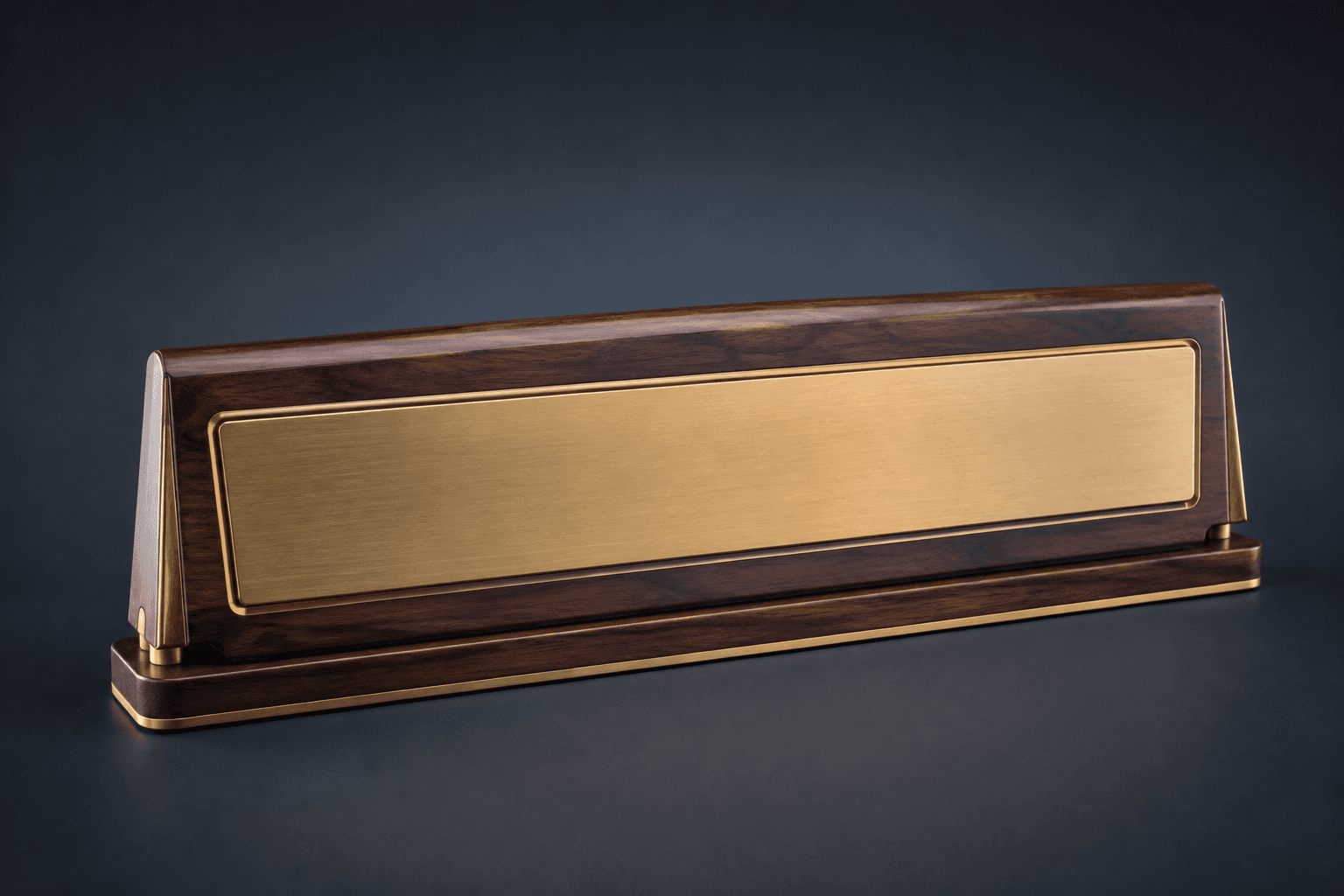
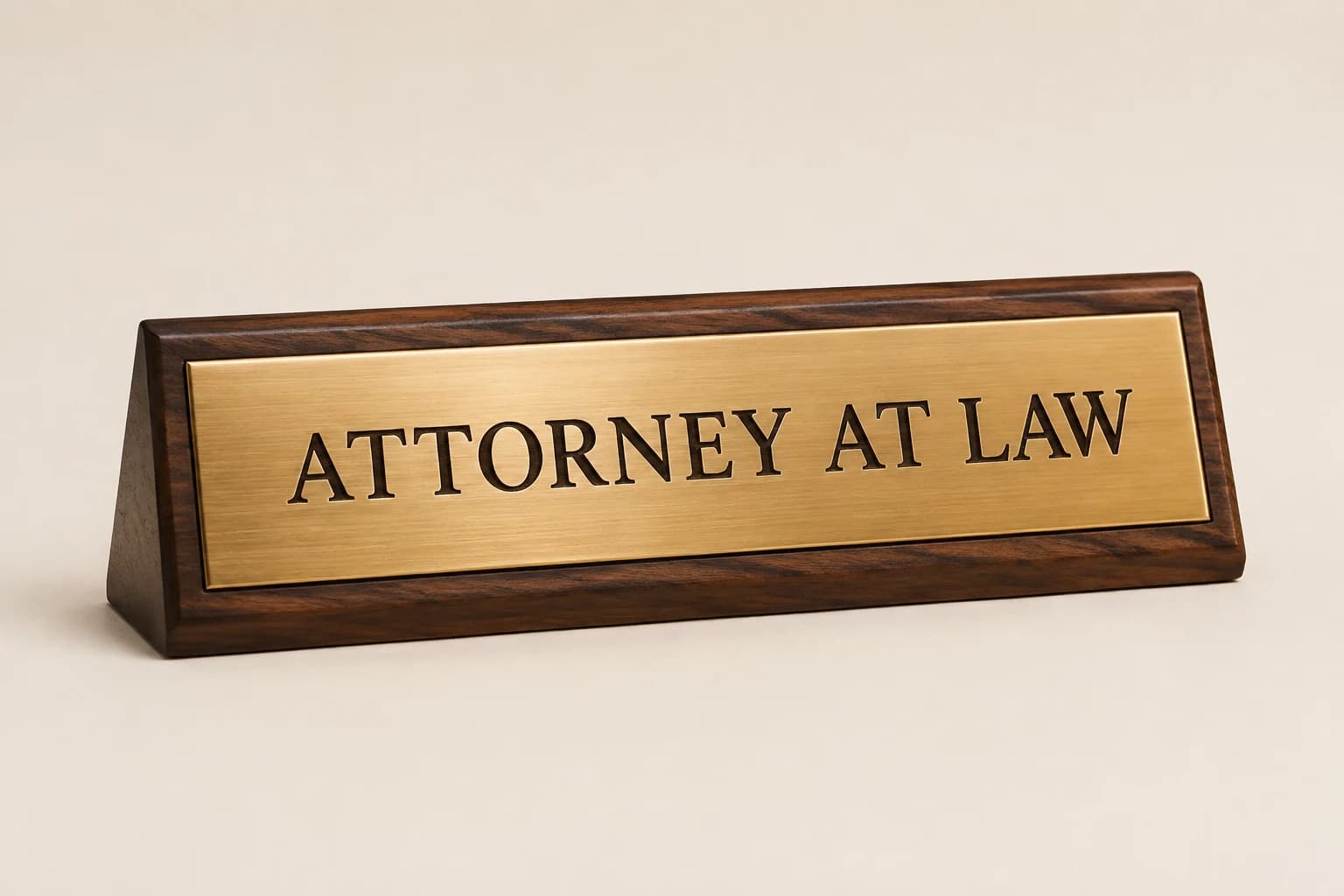
How do you choose the relationship between the languages?
Decide whether the languages receive equal prominence, appear in a fixed order or serve different positions in the sign system. Apply the chosen relationship intentionally rather than allowing line length to determine which language looks secondary. Show representative long phrases so the firm can assess balance before approving the whole set.
If one language uses a different script, ask the designer and maker to confirm that the actual production workflow preserves it. Review the final artwork in its intended form, not only editable text pasted into an email. The language reviewer should inspect the assembled proof because line breaks, missing marks or reversed character order can change the visible result even when the source text was correct.
Illustrative example: How do two room-label languages total twenty-nine characters?
For a fictional layout exercise, use Meeting Room on the first line and Sala de reuniones on the second. The first line contains twelve characters: seven in Meeting, one space and four in Room. The second contains seventeen: four in Sala, a space, two in de, another space and nine in reuniones. Together they contain twenty-nine characters.
With an eighteen-character line budget, both lines are within the chosen budget and the longest line is seventeen. The worksheet records them as sample wording for a language reviewer, not as a universally approved translation for every office. The checker measures characters; it does not decide audience suitability or physical readability.
Compare the two lines in the proposed sign area. If the longer line looks compressed, revise spacing, hierarchy or the physical proposal and have the reviewers inspect the new proof. Do not remove a word from the second language merely because the first language happens to be shorter.
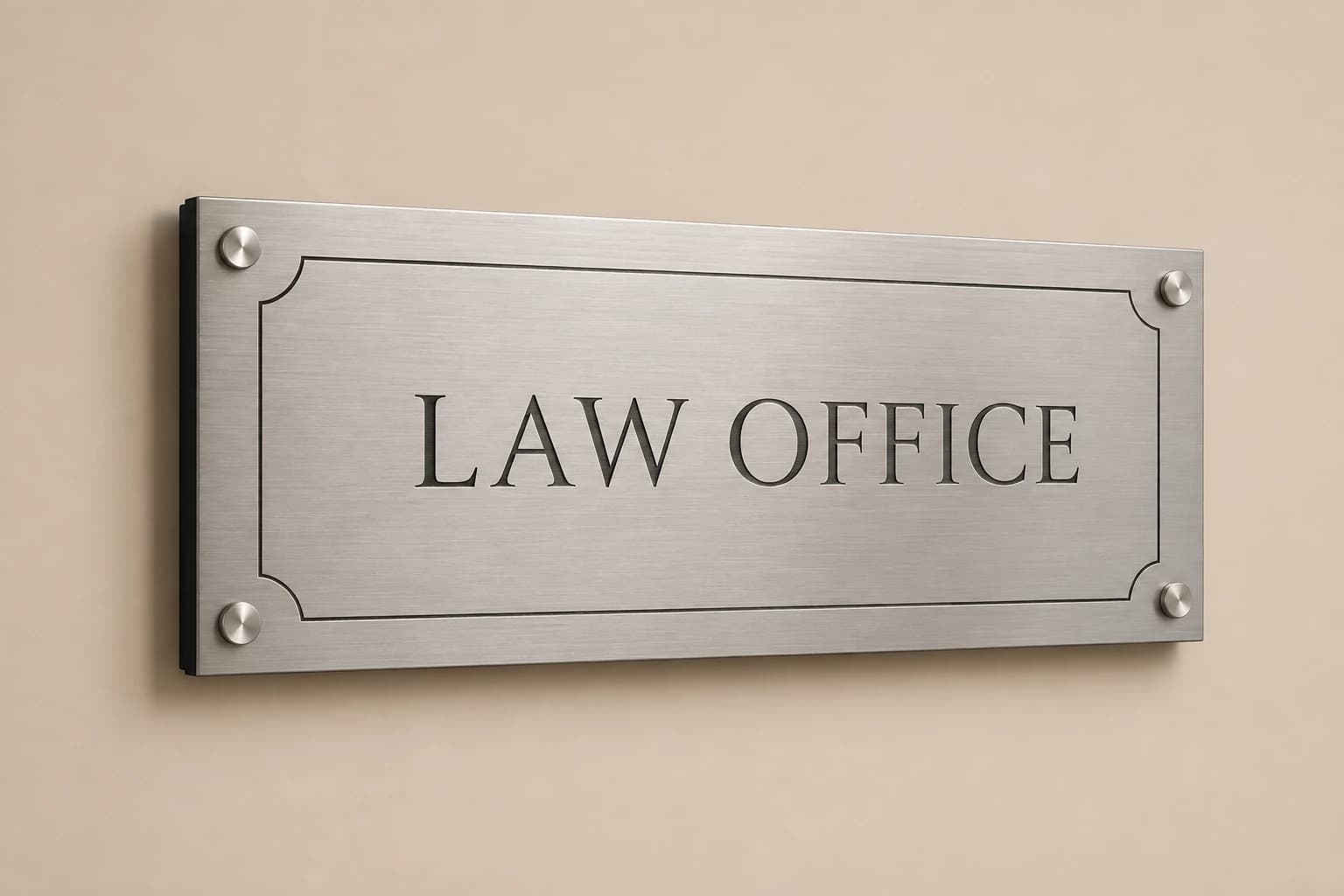
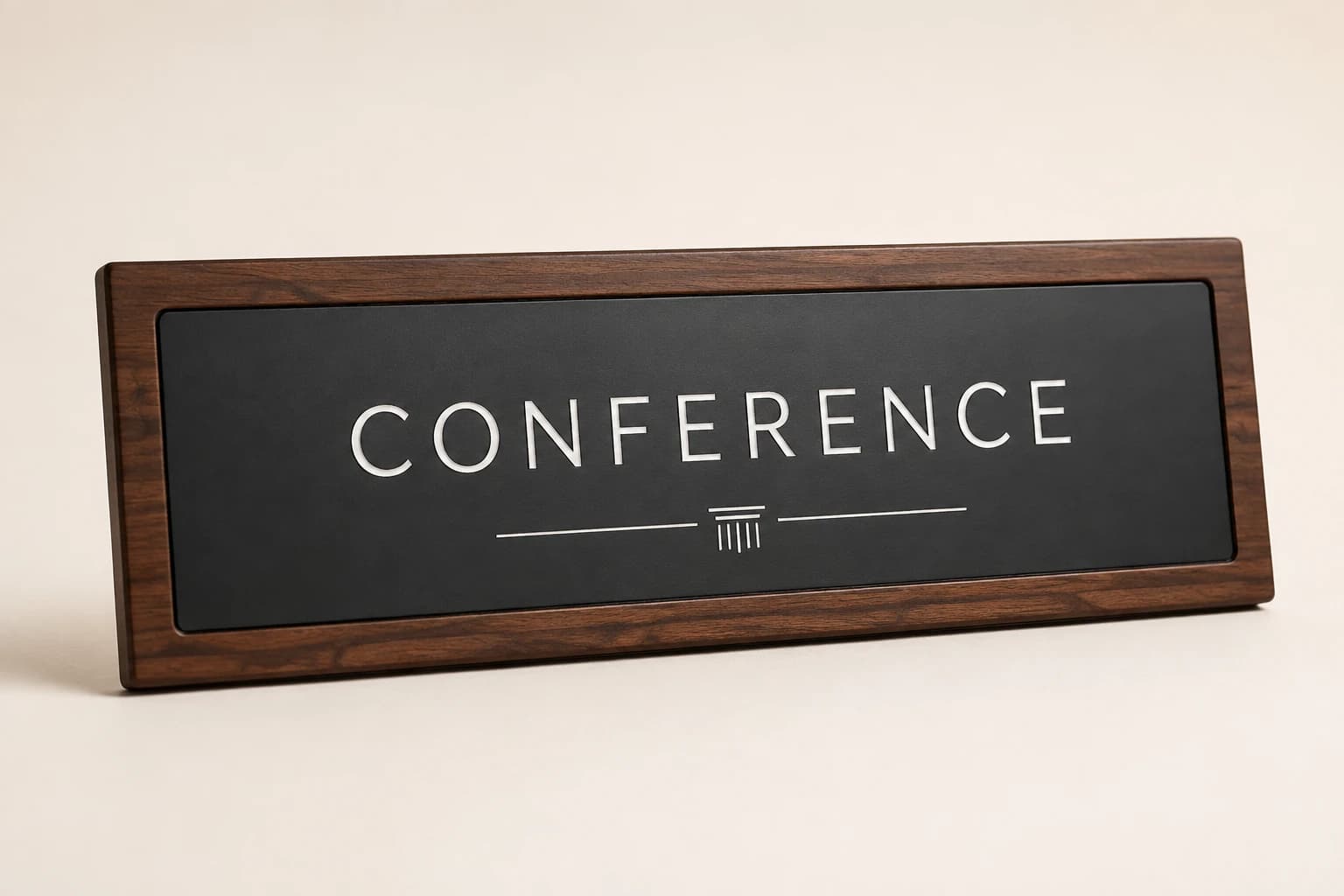
How do you coordinate location labels with the rest of the office?
A room sign should use the same approved room reference as the booking system, reception instructions and internal location schedule where those are part of the project. If the firm chooses translated descriptive labels, keep them connected to a stable room identifier so different language speakers are directed to the same place.
Review any arrows or orientation marks in the actual approach direction. Translation approval does not establish that a sign points toward the right room. Ask the facilities contact to confirm placement and any applicable project requirements. The bilingual text is one part of a complete sign schedule, and the maker should receive the location and physical specification as well as the words.
Compare two bilingual room-label lines
Load the fictional worked example, then replace every assumption with your approved project inputs.
Method: Count characters and lines against a user-selected budget. Translation, professional meaning and physical fit require separate review.
Build your plan
Counts include spaces and punctuation. Character count cannot establish physical fit: font, script, layout, material and engraving area require a proof at actual size.
Use the article’s example files
Fictional example rows show how to separate physical quantities, wording and approval references. Replace them with your project schedule. HOLD and SAMPLE entries are not production instructions.
How do you handle mixed names and scripts carefully?
An attorney may use a preferred name in one script and an approved rendering in another. Obtain both from the authorized person rather than generating a transliteration from a staff list. Keep the relationship between those strings explicit so a spelling correction in one is not assumed to authorize a different change in the other.
For a firm name, distinguish an official alternate name from a translated explanation. The sign should not inadvertently create a new business identity because a designer filled a blank second-language field. If the firm wants only the descriptive line translated, mark the name as unchanged in both the copy sheet and proof. Review the whole sign so repeated names do not become visually redundant or confusing.
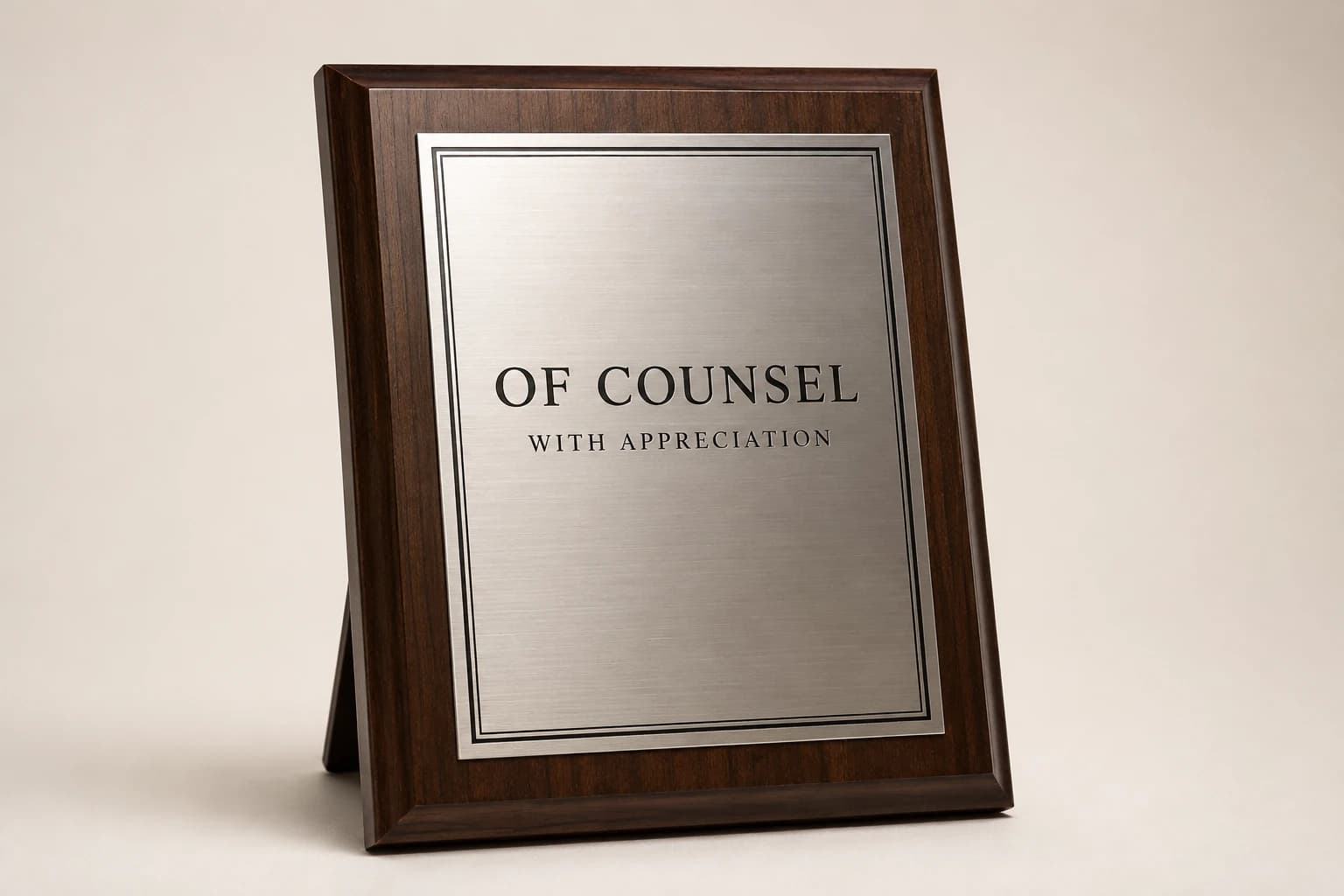
How do you release a complete bilingual proof?
Approve the final paired layout, not two independent text documents that have never been seen together. Identify the sign reference, both language revisions, physical dimensions and selected design. If one reviewer requests a change, circulate the revised combined proof to the relevant approvers so no one is relying on an older arrangement.
At receiving, compare the produced text with the approved proof in both languages. Check accents and marks as carefully as large words. Keep any correction tied to the sign reference and exact line. For future additions, reuse the agreed language relationship while obtaining fresh approval of the new content. A consistent visual system does not remove the need to review a newly introduced professional term.
How do you test the sign with the intended visitor task?
Ask a reviewer familiar with each language to describe what the complete sign tells a visitor to do or understand. For a conference-room identifier, both versions should point to the same room concept. For a firm plaque, both should preserve the approved identity relationship. This review can reveal a mismatch that a word-by-word check misses.
Use the proposed placement context in the discussion. A short room label viewed from a doorway and a larger reception plaque read at a distance may need different layouts. Do not use the character checker to decide viewing distance or letter size. The facilities and design reviewers should address those physical questions for the actual project.
If the languages require different line breaks, review the alignment and reading order after those breaks are applied. Keep punctuation attached to the words it qualifies and have the language reviewer confirm the finished representation. A line that was correct in the source worksheet may be less clear when split across the physical face.
Record any unresolved terminology as a hold on the affected sign, not an invitation for the maker to choose the closest available word. Other fully approved signs can proceed through the firm’s chosen release process if their scope is independent. The held item should retain its reference so it is neither forgotten nor replaced by an unreviewed translation during final packing.
How do you keep the language pair connected during reorders?
Store the approved language versions together with a common sign reference. If a role changes, do not update one language while leaving the other attached to an older proof. Ask each language reviewer to confirm the revised meaning and then review the assembled layout again.
For a replacement at another office, confirm that the same language order and terms are still intended. A previously approved sign is a useful reference, not automatic authorization for a different audience or jurisdiction. Retain the exact text and font-related production requirements in the final artwork record so accents, punctuation or script shaping do not disappear when a file is recreated.
Which option fits this order?
Choose paired lines, separate coordinated signs or an official name with translated description according to the audience and approved meaning. Each approach has different physical and review needs. Compare the assembled language versions at actual size, keeping professional identity, translation quality and location direction as separate decisions in the final release.
| Option | Useful when | Scope to resolve |
|---|---|---|
| Paired lines on one face | Both language versions are needed at the same viewing point. | Relative prominence, line breaks, script support and the usable physical area. NameBadge.com lists desk and wall nameplates. |
| Separate coordinated signs | Different locations or audiences justify distinct language presentations. | Two physical quantities, placement references and preservation of the same intended room or identity. |
| Official name with translated descriptor | The firm name remains unchanged while a role or function is explained. | Authorization of the official name and exact approval of the descriptive translation. |
Sources: NameBadge.com: Custom Desk Name Plates & Office Name Plates
What should buyers confirm before ordering?
Bilingual office signs need a firm-approved identity and competent review of both visible language versions. The physical sign count and translation scope should be clear in the quote. These answers explain title meaning, official names and final artwork checks without assuming that literal translation or equal font sizes automatically produces an appropriate result.
What affects the price of bilingual law office signs?
Chambers Nameplates quote requests should identify the physical signs, language versions, supplied or commissioned translation work, layout scope and included supports. A longer paired message may require a different format. Compare written proposals against the accepted language and placement brief rather than assuming a second language is a free copy of the first line.
Can we translate a professional title literally?
Have the firm’s responsible reviewer approve the intended meaning and a competent language reviewer approve the visible wording. Literal substitution may not preserve the intended professional identity. Provide the full phrase and its intended office use rather than an isolated word. The firm’s responsible reviewer should resolve any professional or jurisdiction-sensitive meaning before production receives the accepted text.
Does a correct text file guarantee a correct sign?
No. Review the final assembled artwork and produced result for marks, script behavior, line breaks and placement. The production representation can differ from the source text. Ask each language reviewer to inspect the actual selected artwork. A source string can be correct while a missing mark, awkward break or changed reading order makes the final visible representation wrong.
Should both languages have the same font size?
Choose the intended hierarchy and review it at actual size. Equal point sizes do not automatically create equal visual prominence across different words or scripts. Review the intended hierarchy and complete usable area with both language strings present. A visual balance decision should not become an unapproved deletion or a newly invented abbreviation in the longer version.
Can an official firm name remain unchanged in both languages?
Yes, when the firm authorizes that treatment. Distinguish the official name from a translated descriptor or room function in the copy sheet. The language reviewer should understand which fields remain fixed, and the final combined proof should make the intended identity relationship clear without inventing a new translated business name.
Sources and scope
The sources below support the cited technical details. The ordering workflows are editorial recommendations. Your project specification, price and schedule are established in the written quote and approved proof.
- NameBadge.com: Custom Desk Name Plates & Office Name Plates · checked 2026-09-05
Which buying guide should you read next?
All buying guidesUse one firm order with separate desk, door and shared-room schedules so repeated attorney names do not conceal missing signs or mismatched mounting.
Prioritize the approved professional identity, then use actual-size layouts to handle long names and credentials without inventing abbreviations.